From road to sea
We aim to provide safe and reliable passenger transport and to transfer more freight from road to sea.
Color Line’s five vessels transport approximately 360,000 TEU (6-metre units) to and from Norway each year. By shifting more freight from road to sea, we contribute to lower greenhouse gas emissions, fewer traffic accidents, reduced road wear, and a decreased need for land use associated with road construction.
-
Goals by 2030
- Increase capacity utilization for cargo transport across the existing fleet by 10%, compared to 2022
- Reduce emissions per freight unit by 20%, compared to 2022
- At least 99.6% on-time performance for transport connections
- Climate-neutral vehicle fleet
Our key initiatives
Color Line is one of Norway’s largest operators in international maritime transport, carrying substantial volumes of freight each year between Norway, Sweden, Denmark and Germany. We have a clear ambition to contribute to a more sustainable transport sector—by shifting freight from road to sea, reducing emissions per freight unit, and developing solutions that combine different modes of transport in the most climate-friendly way possible.
Sea transport must become the first choice
Although maritime transport offers significant climate and environmental advantages compared with road transport, the shift from road to sea does not happen automatically. To succeed, sea transport must meet the requirements of cargo owners and logistics providers in terms of price, reliability, flexibility and regularity.
Color Line offers high-frequency, year-round routes between Norway, Denmark, Sweden and Germany, with very high punctuality and predictability. This positions us well to meet market demand. To further increase flexibility and ease of use, we are digitalising and automating our freight forwarding and customs clearance solutions. This will make it easier and more cost-effective to choose sea transport.
At the same time, we actively promote maritime transport as the “green route” in the transition to a low-emission society. We participate in industry collaborations such as the Green Land Transport Programme and work closely with authorities, organisations and the business community to develop green freight corridors and improve integration between sea, road and rail. We continuously assess capacity adjustments to meet growing demand for sustainable freight solutions—and aim to be a driving force in making sea transport a genuine first choice for more customers.
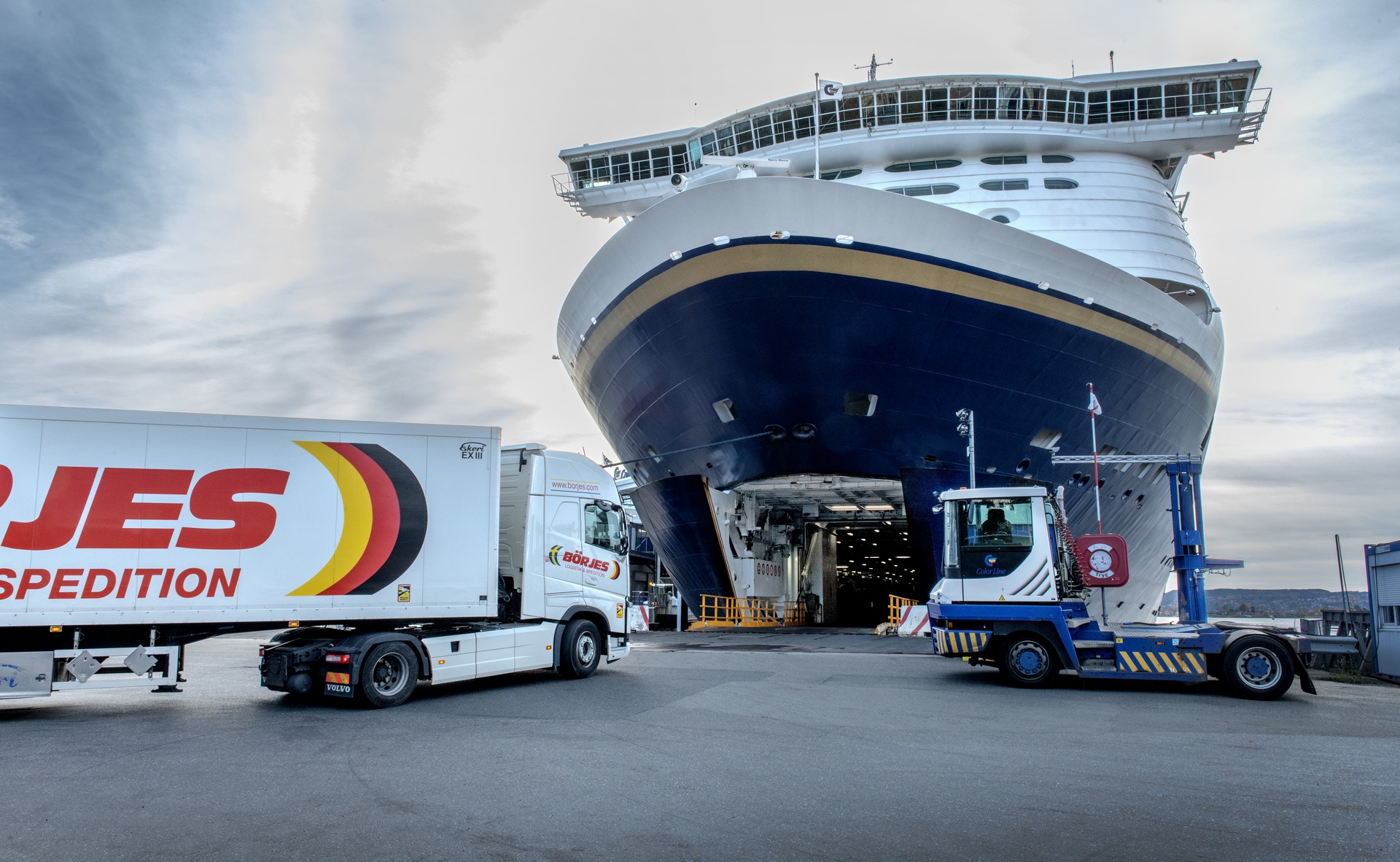
Efficient and climate-smart freight
To reduce the climate impact per freight unit, we work actively to improve onboard capacity utilisation, streamline logistics and reduce our own emissions. At the same time, we invest in climate-friendly technologies and solutions to reduce emissions throughout the entire transport chain. This work is aligned with Color Line’s overarching ambition of climate-neutral operations. For our customers, environmental performance in the logistics chain is becoming increasingly important. We intend to be part of the solution.
Intermodal solutions for the future
Color Line is committed to intermodal transport, combining sea, rail and road in an efficient manner. A key example is our port in Kiel, Germany, where a well-functioning intermodal hub has been established, with direct rail connections to destinations such as Italy and several logistics hubs across Europe. Freight can be transferred directly from ship to train and reach Oslo in less than 48 hours.
Solutions of this kind deliver significant environmental benefits compared with long-distance road transport and contribute to more cost-effective and predictable logistics. Over time, we expect additional Color Line ports to be adapted for intermodal freight solutions—subject to public facilitation and increased market demand.
Color Line actively participates in public and private partnerships, including the Green Land Transport Programme, and works closely with authorities and the business community to realise modern, green transport corridors integrating sea, rail and road.